
Bifold entrance doors are one of the most attractive additions a homeowner can make. They create a seamless connection between indoor and outdoor spaces, allow natural light to flood a room, and provide a modern aesthetic that many homeowners love. Yet even the best bifold door system can develop weatherproofing issues over time. Constant exposure to wind, rain, temperature fluctuations, and daily operation can gradually affect seals, frames, and moving components. When these small issues are ignored, they often lead to bigger problems such as higher energy bills, water damage, and reduced comfort indoors.
Research on door energy efficiency shows that damaged weatherstripping and poor sealing can significantly increase air leakage and energy loss around exterior doors. In older or poorly maintained systems, air leakage through doors can contribute substantially to heating and cooling inefficiencies.
The Hidden Cost of Drafts and Moisture
A draft around a bifold door might seem harmless at first. You may simply notice a slight chill near the floor during winter or feel a breeze when sitting close to the doors. Over time, however, these drafts force heating and cooling systems to work harder. The result is increased utility costs and a less comfortable indoor environment. Moisture intrusion creates an even bigger concern because water can damage flooring, trim, wall materials, and insulation.
Think of your bifold doors like a winter coat. If the zipper doesn’t fully close, cold air gets in no matter how thick the fabric is. The same principle applies to bifold doors. Even high-quality glass and frames cannot perform effectively if gaps, damaged seals, or misalignment allow outside air and water to enter. Regular weatherproofing helps maintain the performance you paid for and protects your investment for years to come.
Where Drafts Commonly Develop Around Bifold Doors
Drafts rarely appear randomly. They usually develop in predictable areas where components experience movement, wear, or environmental stress. Understanding these common trouble spots helps homeowners identify issues before they become severe.
Gaps Along the Frame and Meeting Rails
One of the most common locations for drafts is around the perimeter frame. Weatherstripping installed along the sides and top of the frame compresses every time the doors are opened and closed. Over several years, these seals may flatten, crack, or lose flexibility. Once this happens, cold air can pass through even when the doors appear fully shut.
The meeting rails where individual bifold panels connect are another frequent source of air leakage. These areas depend on compression seals to create a tight barrier. If panels become slightly misaligned due to wear or seasonal movement, tiny gaps may develop between sections. Even a gap too small to see can allow noticeable drafts under windy conditions. Modern bifold systems use compression gaskets and multi-point locking systems specifically to minimize this risk, but maintenance remains essential.
Problems Around the Threshold
The threshold is often the weakest point in any exterior door system. Daily foot traffic, dirt accumulation, and exposure to rain cause threshold seals to wear faster than other components. Drafts at floor level almost always indicate a threshold problem. Water intrusion also frequently begins here because thresholds are responsible for directing rainwater away from the interior.
The following table highlights common draft locations and their typical causes:
| Location | Common Cause | Typical Solution |
|---|---|---|
| Top Frame | Worn weatherstripping | Replace seals |
| Side Jambs | Compressed gaskets | Install new compression strips |
| Meeting Rails | Panel misalignment | Adjust rollers and hinges |
| Threshold | Worn sweep or gasket | Replace threshold seal |
| Frame Perimeter | Failed caulk | Re-caulk exterior joints |
Many experts identify the threshold as the most common single source of both drafts and water leaks in exterior doors.
Checking Gaps Before Adding New Seals
Many homeowners rush to replace weatherstripping when they notice a draft. While new seals can help, installing them without identifying the actual source of the problem often wastes time and money. Proper inspection should always come first.
Visual Inspection Techniques
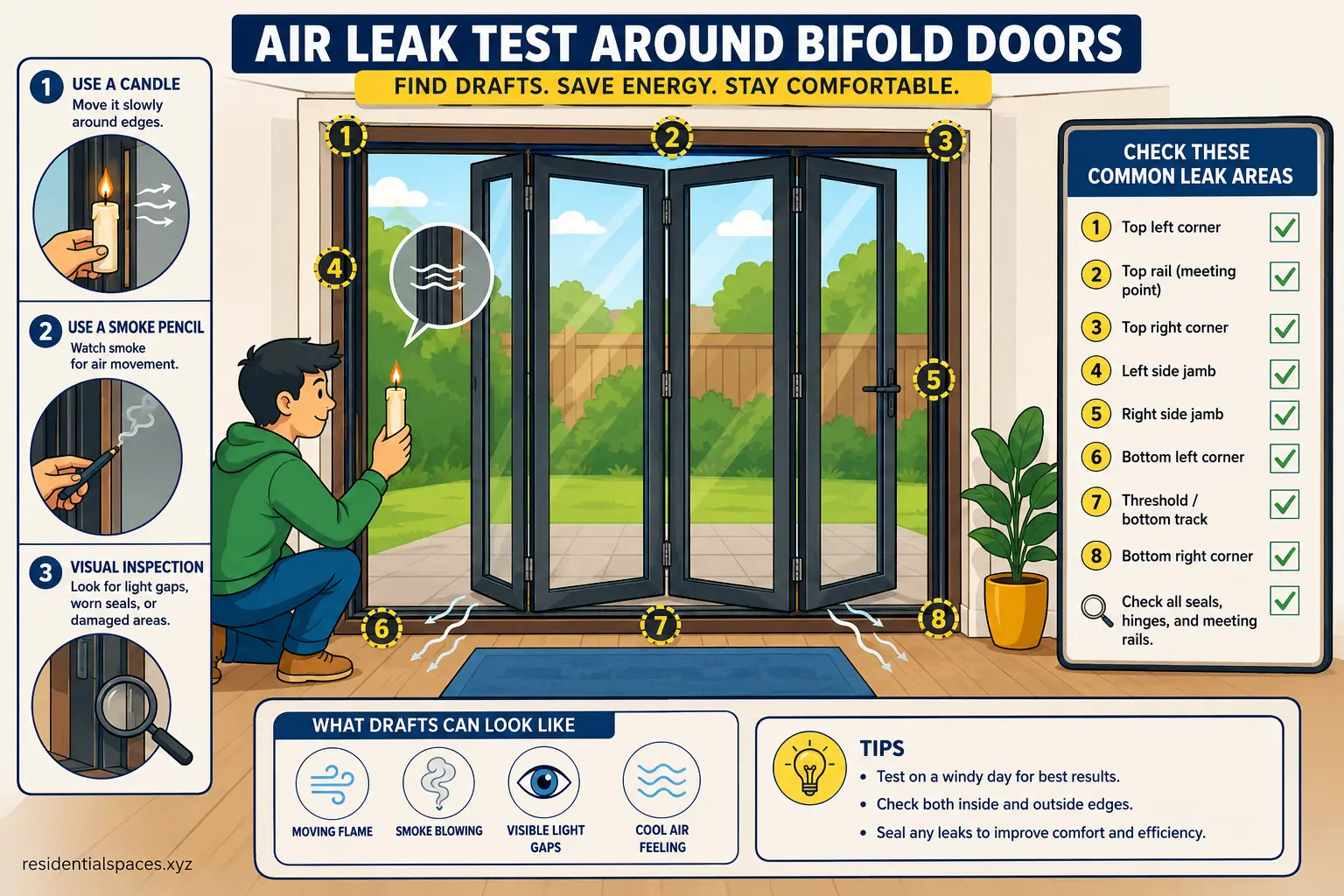
Start by examining all visible seals around the door system. Look for cracking, flattening, brittleness, or sections that have separated from their mounting channels. Pay close attention to corners because weatherstripping often deteriorates there first. Inspect the threshold for worn sweeps, damaged gaskets, and debris accumulation that may interfere with sealing.
Also examine the exterior caulk around the frame. Small cracks in caulk joints can allow both air and water infiltration. Since these gaps occur between the frame and wall rather than between the moving door panels, replacing weatherstripping alone will not solve the issue. Exterior sealant maintenance is an important but often overlooked aspect of weatherproofing.
Testing for Air Leaks
A simple draft test can reveal hidden gaps. On a windy day, slowly move your hand around the perimeter of the closed door. Pay attention to any noticeable airflow. Another method involves using a thin strip of paper. Close the door on the paper and gently pull. If the paper slides out easily, the seal may not be compressing properly in that location.
These tests help pinpoint specific problem areas instead of relying on guesswork. They also reveal whether the issue stems from worn seals, misalignment, or structural movement. Performing these checks before purchasing replacement materials ensures that the chosen solution addresses the root cause rather than just the symptoms.
Choosing Weather Stripping That Fits Properly
Selecting the correct weatherstripping is critical. A seal that is too thin leaves gaps, while one that is too thick can make the doors difficult to close and potentially damage hardware over time.
Types of Weather Stripping Materials
Several weatherstripping materials are commonly used with bifold entrance doors:
| Material | Advantages | Best Use |
|---|---|---|
| EPDM Rubber | Durable and flexible | Exterior door frames |
| Silicone | Excellent weather resistance | High-moisture environments |
| Foam Tape | Affordable and easy to install | Temporary fixes |
| Brush Seals | Low friction | Thresholds and sliding sections |
| Compression Gaskets | Strong airtight seal | Modern bifold systems |
Rubber and silicone products are generally preferred because they maintain flexibility through temperature extremes. Brush seals work well in moving areas but may not provide the same level of airtightness as compression gaskets. In exposed locations with heavy wind-driven rain, compression-based sealing systems tend to deliver superior performance.
Selecting the Correct Size and Compression
Accurate measurements are essential when purchasing replacement weatherstripping. Measure existing seal channels and compare dimensions carefully. The goal is to create enough compression to block air and water without placing excessive strain on hinges, rollers, or locking mechanisms.
Imagine trying to close an overstuffed suitcase. The zipper may close, but it requires extra effort and eventually wears out. Oversized weatherstripping creates a similar problem. Properly fitted seals compress just enough to form a barrier while allowing smooth door operation.
Improving Insulation Around the Door Frame
Weatherstripping addresses moving gaps, but insulation improvements around the frame itself can significantly enhance overall performance.
Sealing Frame-to-Wall Gaps
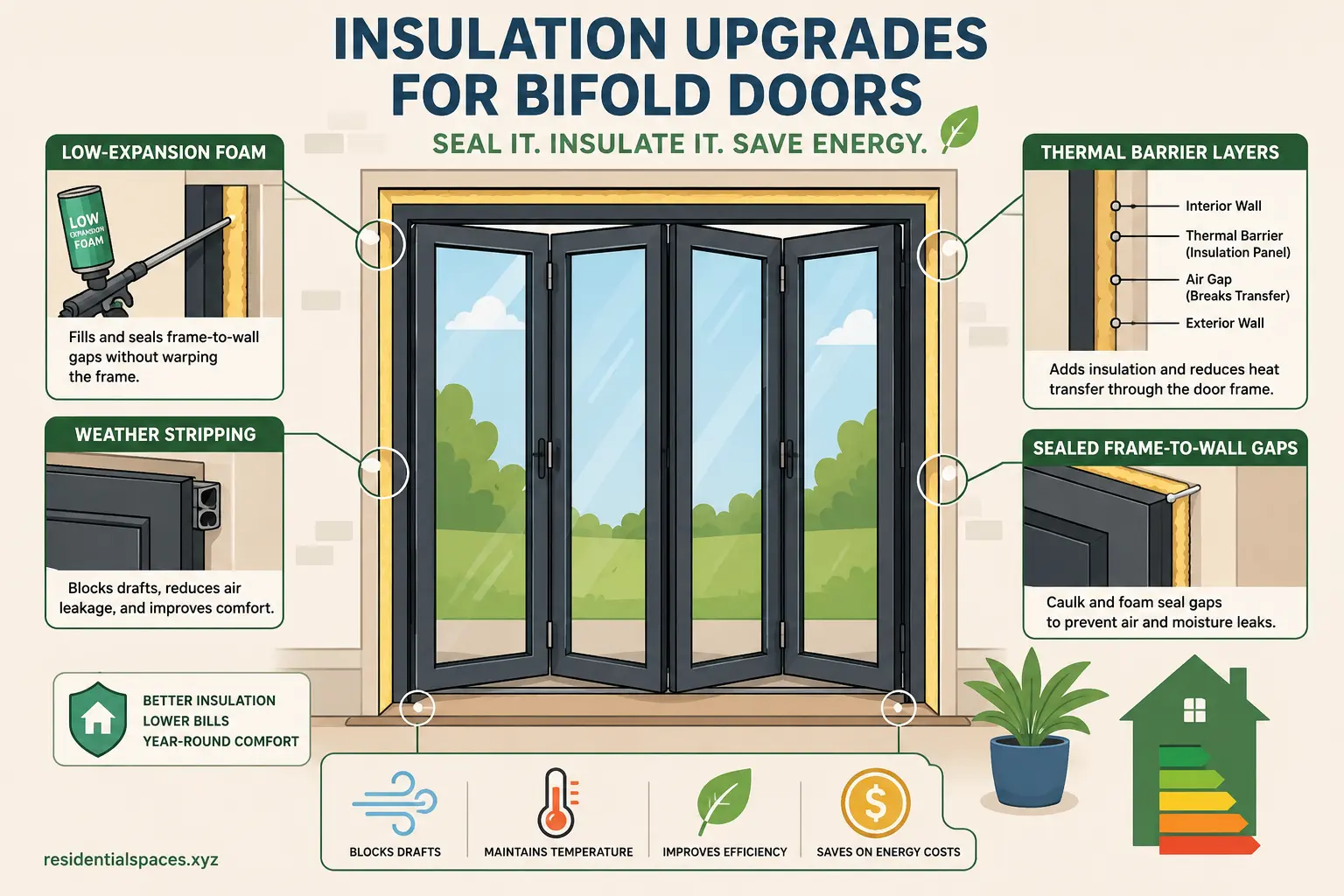
The connection between the door frame and the surrounding wall is a common source of hidden energy loss. Over time, settlement, temperature changes, and material movement can create tiny openings that allow air infiltration. These gaps are usually concealed behind trim, making them difficult to detect.
Removing interior trim and applying low-expansion insulating foam can help seal these spaces effectively. Exterior caulk should also be inspected and replaced when signs of cracking or separation appear. Proper sealing around the frame often provides dramatic improvements in comfort because it eliminates air pathways that weatherstripping alone cannot address.
Upgrading Thermal Performance
Modern bifold systems frequently include thermally broken frames and advanced glazing technology. These features reduce heat transfer and improve indoor comfort. While replacing an entire door system may not always be necessary, upgrading worn seals and improving insulation around the frame can help older installations perform more like modern systems.
Condensation patterns can also indicate insulation weaknesses. If moisture regularly forms around specific frame sections, those areas may be colder than surrounding surfaces due to poor insulation or thermal bridging. Addressing these weak points improves energy efficiency and reduces moisture-related risks.
Keeping Moisture Out During Heavy Rain
Water intrusion is one of the most serious issues affecting bifold entrance doors. Unlike drafts, which primarily affect comfort and energy efficiency, water can cause structural damage if left unresolved.
Protecting the Threshold Area
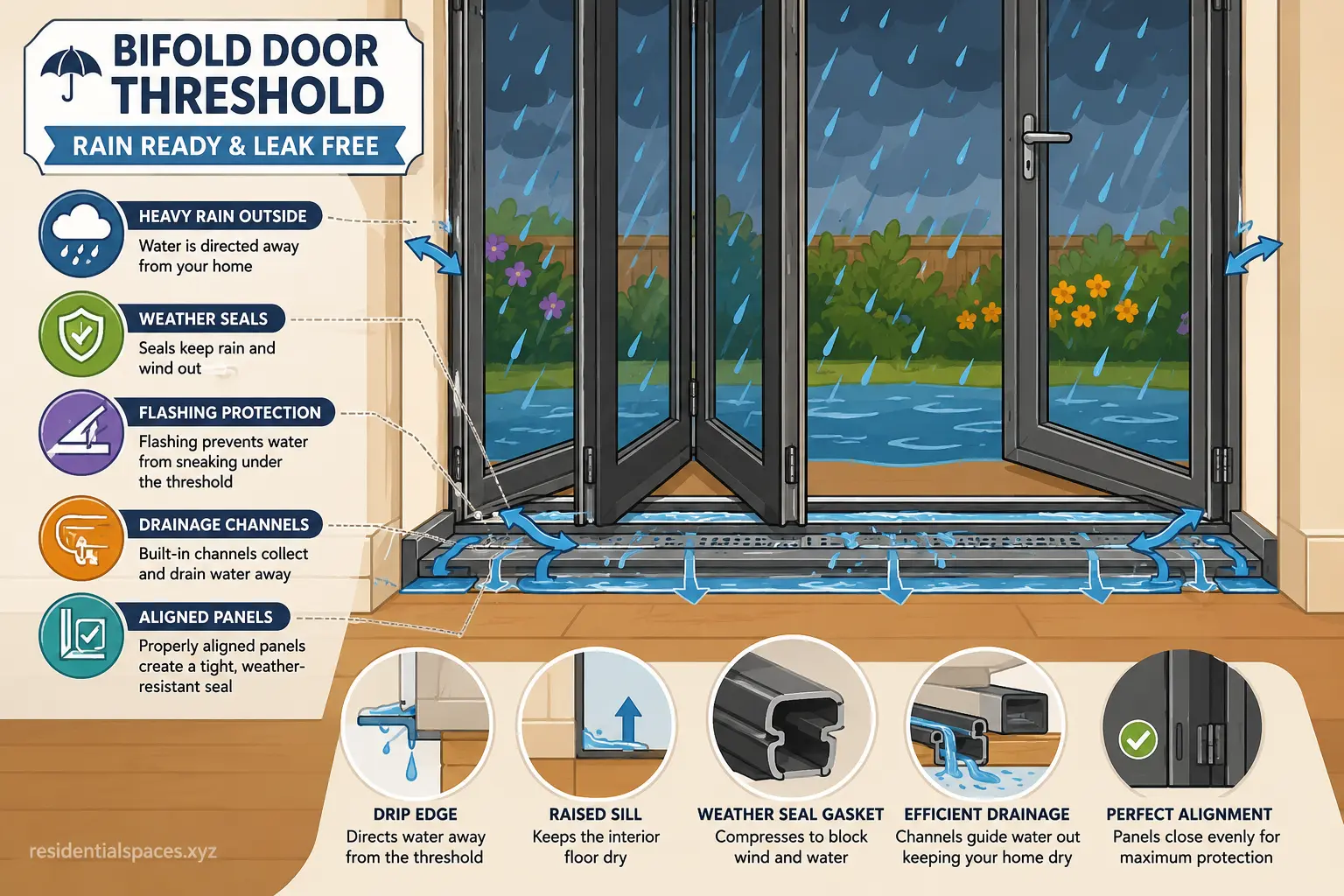
Heavy rain places enormous pressure on thresholds. Wind-driven water seeks out every available opening, including tiny cracks and worn seals. Door sweeps, gaskets, and threshold seals work together to prevent this intrusion. When any component fails, water may begin entering beneath the door.
Homeowners should inspect threshold seals regularly and remove dirt, leaves, and debris that could interfere with drainage. Water pooling near the threshold is a warning sign that drainage channels may be blocked or that seals are deteriorating.
Managing Drainage and Water Runoff
Effective weatherproofing extends beyond the door itself. Patios, walkways, and landscaping should direct water away from the entrance rather than toward it. Poor drainage can overwhelm even a properly sealed door system.
Exterior caulk, flashing, and drainage channels should also be maintained. Water entering around the frame often originates from failed flashing or deteriorated sealant rather than the door panels themselves. Identifying these issues early helps prevent expensive repairs later.
Adjusting Misaligned Panels for a Better Seal
Misalignment is a surprisingly common cause of weatherproofing problems. As buildings settle and materials expand or contract seasonally, bifold panels may shift slightly from their original positions.
Signs of Panel Misalignment
Common symptoms include:
-
Difficulty locking the doors
- Uneven gaps between panels
- Drafts despite intact weatherstripping
- Water leaks during storms
- Doors that stick or drag during operation

Keegan Sorrell is a 35-year-old American blogger and digital content specialist from Asheville, North Carolina. His background includes writing in-depth guides covering residential design, outdoor living, and property maintenance for online audiences. Through his work with residentialspaces.xyz, he focuses on producing accurate, engaging, and well-researched content that supports both homeowners and industry readers while maintaining high editorial standards.