
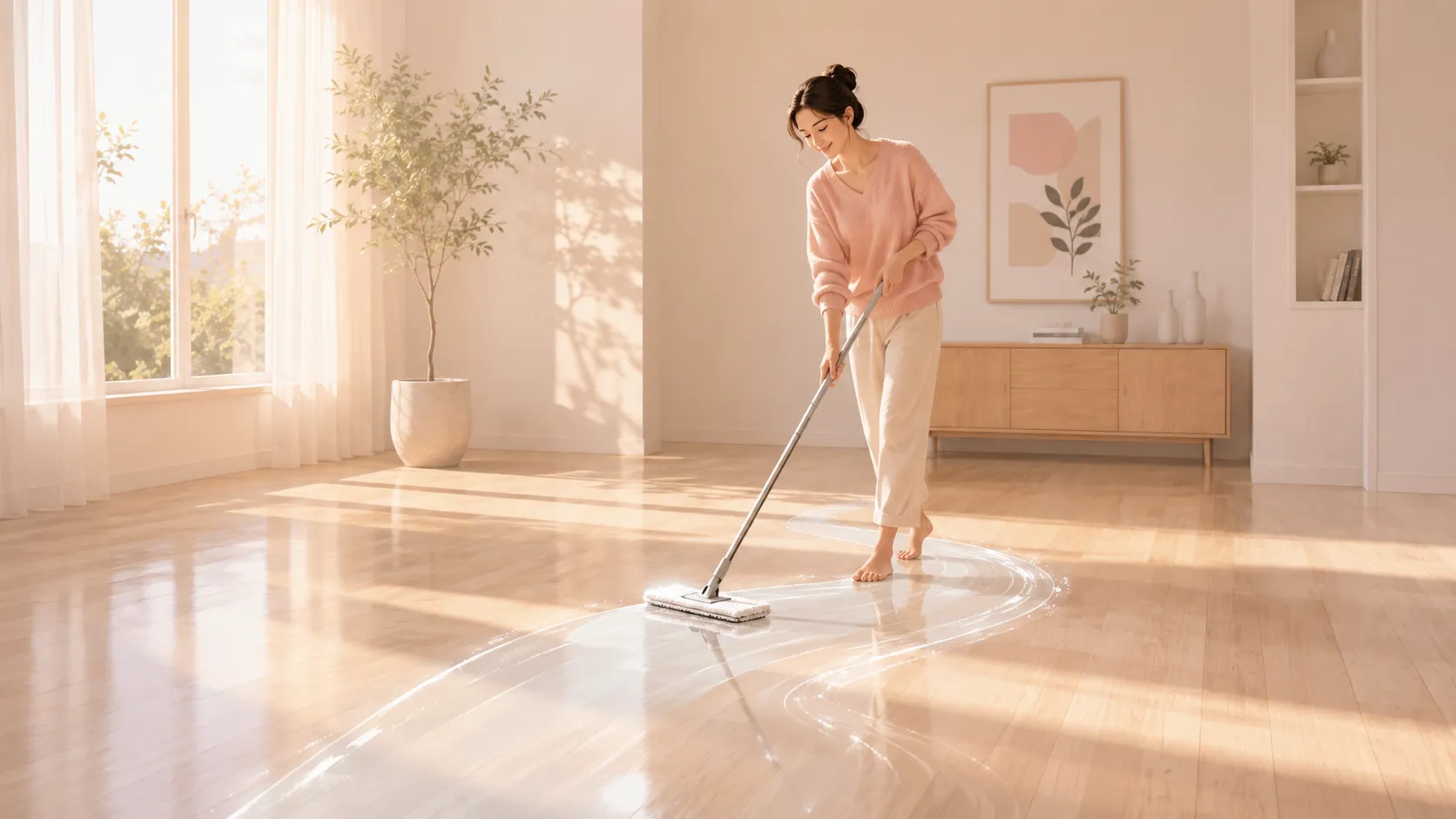
Many people assume more cleaning solution means cleaner floors. Ironically, the opposite is often true. Excessive amounts of floor cleaner leave behind a thin film that attracts dust and creates visible streaks after drying. Cleaning experts repeatedly identify overuse of soap and cleaning agents as a primary cause of streaking. Products containing oils, waxes, ammonia, or heavy detergents can be particularly problematic. While these formulas may promise shine, they frequently leave a residue layer that dulls the appearance of laminate over time. Once buildup develops, every future cleaning session becomes more difficult.
A simple comparison highlights the issue:
| Product Type | Streak Risk | Laminate Safety |
|---|---|---|
| pH-neutral laminate cleaner | Low | Excellent |
| Vinegar-water solution | Low | Good |
| Oil-based cleaner | High | Poor |
| Wax products | Very High | Poor |
| Excess soap solutions | High | Fair |
Using Too Much Water During Cleaning
Water is another common culprit. Laminate flooring and excessive moisture are not good partners. Water that seeps into seams can cause swelling, warping, and edge damage over time. Experts consistently recommend lightly damp cleaning rather than wet mopping. A soaked mop leaves puddles that collect dirt and dry unevenly. These drying patterns create streaks while also threatening the floor’s structural integrity.
Dirty Mop Heads and Cleaning Tools
Imagine washing your car with a muddy sponge. The result would hardly be clean. The same principle applies to laminate floors. Dirty mop pads redistribute grime instead of removing it.
Cleaning professionals recommend changing or rinsing microfiber pads frequently during cleaning sessions. A heavily soiled pad quickly becomes a streak-producing machine.
The Importance of Dry Cleaning Before Mopping
Removing Dust, Sand, and Grit First
One of the biggest mistakes homeowners make is reaching for the mop before removing loose dirt. Dust, pet hair, sand, and debris should always be removed first through vacuuming, sweeping, or dry microfiber mopping. Flooring specialists emphasize this as the first step in any successful laminate cleaning routine. Dust may seem harmless, but when mixed with water and cleaner, it transforms into a muddy film. That film spreads across the floor, creating visible streaks that become difficult to eliminate.
How Dirt Becomes a Streak-Creating Mud Layer
Think about painting over a dirty wall. The dirt doesn’t disappear; it simply gets spread around. Mopping over dusty laminate produces a similar effect. Every pass of the mop redistributes particles across a larger area.
For the best results:
- Vacuum using a hard-floor setting.
- Turn off rotating brush bars.
- Use a microfiber dust mop afterward.
- Pay special attention to corners and baseboards.
This preparation step dramatically reduces streak formation.
Choosing the Right Cleaning Products
Laminate-Safe Commercial Cleaners
The safest commercial products are specifically labeled for laminate flooring. Many modern laminate cleaners are designed to evaporate quickly without leaving residue. Flooring experts often recommend pH-neutral formulas because they clean effectively without damaging the protective layer. When shopping, look for phrases such as:
- Residue-free
- Streak-free
- pH-neutral
- Laminate-safe
- Quick-drying
These formulations typically perform better than general-purpose floor cleaners.
Ingredients to Avoid
Certain ingredients consistently cause problems for laminate floors:
- Wax
- Oil-based compounds
- Bleach
- Ammonia
- Abrasive chemicals
- Furniture polish
These substances may damage finishes, create buildup, or increase streaking risks. Multiple flooring-care sources advise avoiding them entirely.
The Right Amount of Moisture to Use
Homemade Cleaning Solutions That Work Well
Vinegar and Water Solution
One of the most popular homemade laminate floor cleaners combines white vinegar and water. Many flooring experts and homeowners report excellent streak-free results from this simple mixture. A common formula includes:
- 1 cup white vinegar
- 1 gallon warm water
The vinegar helps dissolve residues without leaving behind a sticky film. Its acidity evaporates quickly, reducing streak formation.
Alcohol-Based DIY Cleaning Mixes
For tougher grime, some professionals recommend adding a small amount of rubbing alcohol to a vinegar solution. Alcohol speeds evaporation and helps remove oily residues. Always test homemade mixtures in a hidden area first. Different laminate brands may respond differently to cleaning solutions.
Dirt Traps That Spread Streaks Across the Floor
Entryways and High-Traffic Zones
The biggest source of floor contamination is usually the front door. Dirt, sand, and grit enter on shoes and spread throughout the home. Flooring specialists note that grit acts like sandpaper, scratching surfaces and contributing to dullness. Installing quality mats at entrances can dramatically reduce dirt accumulation. A two-mat system works especially well:
- Outdoor scraping mat
- Indoor absorbent mat
This combination captures debris before it reaches laminate flooring.
Hidden Dirt Sources Inside the Home
Not all dirt comes from outside. Common indoor sources include:
- Pet hair
- Kitchen grease particles
- Dust from air vents
- Laundry lint
- Furniture movement
Regular dust control prevents these contaminants from accumulating and contributing to streak formation.
Habits That Keep Laminate Floors Looking Consistently Clean
Beautiful laminate floors rarely result from occasional deep cleaning. Instead, they reflect consistent maintenance habits.
The most effective routine includes regular dust removal, immediate spill cleanup, and controlled moisture cleaning. Experts frequently recommend quick microfiber dust mopping several times per week rather than waiting for heavy dirt buildup. Additional habits that help include:
- Removing shoes indoors
- Using furniture pads
- Cleaning spills immediately
- Washing microfiber pads correctly
- Avoiding fabric softener on microfiber materials
- Rotating entrance mats regularly

Nico Aldridge is a 26-year-old American writer living in Spokane, Washington. He specializes in creating informative articles about interior spaces, smart home trends, and practical renovation ideas backed by reliable research. Writing for residentialspaces.xyz, he blends technical accuracy with approachable language, helping readers confidently understand modern home topics through clear, trustworthy content.